
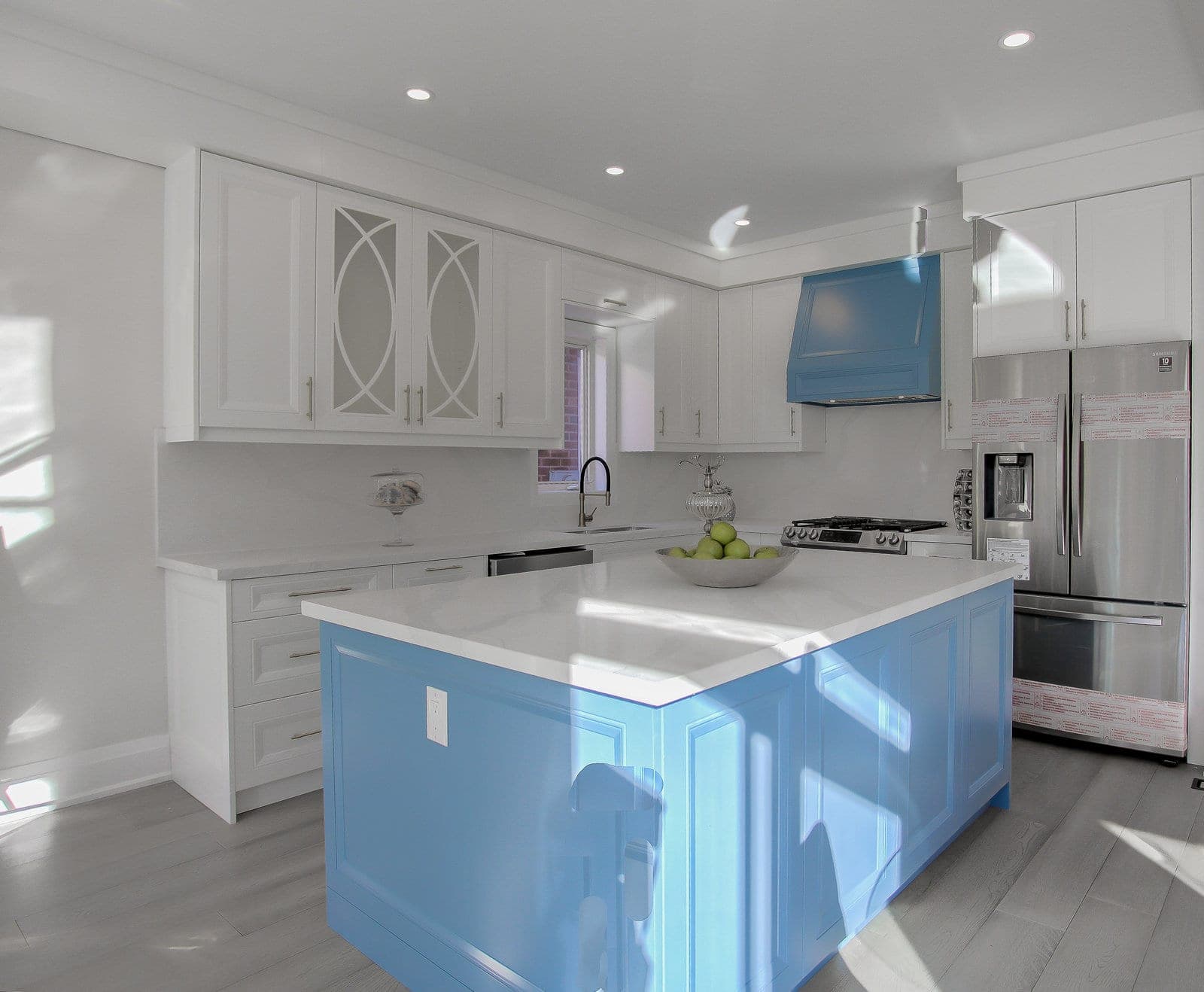
Renovation & Construction in Woodbridge
Building in Woodbridge means working in two very different places at once. The old village along Woodbridge Avenue, founded on the Humber River in the 1830s, is protected as one of Vaughan's four heritage conservation districts. Around it, decades of subdivision growth spread west and north, filling streets with detached family homes and, more recently, very large custom houses. Both are threaded by the Humber's valleys, which fall under Toronto and Region Conservation Authority regulation. A single project can involve the City of Vaughan's Building Standards, its Committee of Adjustment, Heritage Vaughan and TRCA. Nexon Build works out which of those apply to your lot before design starts, so the drawings are built around the approvals rather than revised to chase them.
Woodbridge is Vaughan's Humber River village: a designated heritage core along Woodbridge Avenue surrounded by post-war to 2000s subdivisions and large custom homes. As a licensed renovation and construction company, Nexon Build manages feasibility, permits, scheduling, and quality control in Woodbridge — every project tracked in Buildertrend so you always know where things stand.

| Municipality | City of Vaughan, York Region |
|---|---|
| Permit authority | City of Vaughan Building Standards |
| Committee of Adjustment | City of Vaughan Committee of Adjustment hears minor variance applications |
| Zoning | Comprehensive Zoning By-law 001-2021, approved by the Ontario Land Tribunal on January 18, 2023 |
| Heritage district | Woodbridge HCD, designated by By-law 102-2009 on May 26, 2009 |
| Conservation authority | TRCA; permits under Ontario Regulation 41/24 in regulated areas |
| Tree protection | Private trees 20 cm in diameter or more need a City permit |
Our services in Woodbridge
Woodbridge neighbourhoods we serve
We build and renovate throughout Woodbridge, in City of Vaughan, York Region, including:
Building & permits in Woodbridge
Woodbridge is known for a heritage village core on the Humber River surrounded by post-war to 2000s subdivisions and large custom homes. We manage the full permit process with City of Vaughan (Building Standards, Committee of Adjustment, Heritage Vaughan), with TRCA in regulated areas, including any Committee of Adjustment or minor-variance review your project requires — so your Woodbridge build stays compliant and on schedule from day one.
Renovation costs in Woodbridge
Renovation costs in Woodbridge track the wider GTA market: kitchens from about $30K, bathrooms from about $15K, full home renovations $150K–$800K+, and ground-up custom homes at $350–$650 per square foot. Your number depends on scope, finish level, and the condition of the existing home.
See the full Toronto renovation cost guide, or get a free estimate for your Woodbridge project in under 60 seconds.
Woodbridge History: From Burwick to a Vaughan Community
Settlement began after the Crown granted land here to Jacob Philips and Hugh Cameron in 1802. In 1837, Rowland Burr arrived, obtained land and water mill rights on the Humber and laid out the village, which became known as Burwick; it was renamed Woodbridge in 1855, when a post office was sought and another settlement in Canada West already had the name. Woodbridge was incorporated in 1882, after decades of growth around Burr's mills and John Abell's agricultural works, and the 20th century added a cotton mill. Its agricultural fair dates back to 1847. Vaughan's heritage district plan describes the same layers, from native settlement to agricultural village, cotton mill village and commercial core.
The river shaped everything that followed. When Hurricane Hazel struck in 1954, homes in the village were destroyed and the Woodbridge Fairgrounds were used to house residents who had lost theirs. Large parts of the old village still sit within the Humber floodplain mapped by TRCA, and the Woodbridge Special Policy Area governs development there under special flood rules, so that legacy still shapes where and how you can build. Suburban growth arrived in waves: post-war immigration tripled the population in the 1950s, when ten subdivisions were built between 1951 and 1956, and housing then spread west toward Martin Grove Road and north toward Langstaff Road in the decades that followed.
Woodbridge Neighbourhoods, Lots and Housing Eras
The historic downtown is Woodbridge Avenue, once called Pine Street, between Islington and Kipling Avenues, with the Woodbridge Fairgrounds, still the home of the Woodbridge Fall Fair, close by. Beyond the core, the wider area is made up of later subdivisions; the Toronto Regional Real Estate Board tracks communities here such as East Woodbridge and West Woodbridge, and Vellore Village, home to the City's Vellore Village Community Centre, also carries a Woodbridge address. Each era brought its own house types, from village-core homes of the 1800s and early 1900s to large two-storey subdivision houses and, on many streets, recent custom rebuilds.
Lot patterns follow those eras. Streets in and near the village tend to have irregular lots and valley-edge sites, while subdivisions of the 1970s and 1980s often offer wider frontages that suit knockdown rebuilds. Vaughan's Comprehensive Zoning By-law 001-2021 sorts detached lots by frontage, from Estate Residential zones intended for 45-metre lots to R1 zones for lots of about 18 to 30 metres, with each zone setting its own coverage, height and setback limits. Site-specific exceptions are common, so we read the zoning for the exact parcel rather than assuming the street's typical rules apply.
The Woodbridge Heritage Conservation District
Vaughan adopted the Woodbridge Heritage Conservation District Plan through By-law 101-2009 and designated the district through By-law 102-2009, both passed on May 26, 2009, under Part V of the Ontario Heritage Act. The district covers the historic village, running roughly from Kipling Avenue east to Islington Avenue and from Highway 7 north to just south of Langstaff Road. Its plan, prepared by Office for Urbanism with Goldsmith Borgal and Company Architects, aims to conserve contributing buildings, landscapes and streetscapes, to ensure new design fits Woodbridge's heritage character and to manage development so the village character survives.
Inside the district, new construction, additions, demolitions and changes to building exteriors require a heritage permit in addition to a building permit, with review by the Heritage Vaughan committee and approval under the Ontario Heritage Act. The plan does not support demolishing contributing buildings. New houses are assessed on height, massing, setbacks and streetwall, and contemporary design is acceptable when it is neighbourly and fits the village context. Practically, that means heritage drawings, material samples and streetscape elevations belong in the schedule before the building permit, and we prepare them together so neither approval waits on the other.
Vaughan Permits, Zoning and Trees in Woodbridge
Building permits come from the City of Vaughan's Building Standards department. Zoning By-law 001-2021 is in effect as of October 20, 2021, as approved by the Ontario Land Tribunal on January 18, 2023, except for lands and sections still under appeal, and it has been amended since, so a current zoning review is essential. Where a design exceeds a limit, a minor variance goes to the City of Vaughan Committee of Adjustment before a building permit can be issued. Our guide to building permits in Mississauga, Vaughan and Richmond Hill compares the three processes.
Vaughan's tree rules are stricter than many owners expect. A permit is required before injuring or removing a private tree with a diameter of 20 cm or more, and an arborist typically prepares the supporting report. Removal or injury tied to construction needs a Construction (or Infill) Permit, a Tree Preservation Permit protects retained trees during the work, and approved removals carry replacement planting: one tree for a 20 to 30 cm trunk, rising to four trees for trunks of 51 cm or more. On conviction, fines under the by-law can reach $100,000. On large custom-home lots with mature trees, these rules can shape the footprint as much as zoning does.
The Humber River Valleys and TRCA Approval in Woodbridge
The Humber River and its tributaries run through Woodbridge's valleys and floodplain, and TRCA regulates rivers, streams, floodplains, valleylands and wetlands plus an allowance around them. Since April 1, 2024, those rules have operated under Ontario Regulation 41/24. Building a new house or an addition within a regulated area counts as development, so it needs a TRCA permit unless an exception applies, and the City cannot issue a building permit until TRCA has issued a permit or clearance. TRCA reviews its regulated area mapping every year, so we check the current map for every lot.
TRCA lists pre-consultation as the first step. A complete application typically includes a lot survey with topography where needed, a site grading and landscaping plan showing the top of slope and setbacks, house elevations with the lowest openings relative to grade and the regulatory floodplain elevation, and erosion and sediment control. Staff may also ask for a geotechnical slope stability assessment or stamped structural drawings, and the fee is set by the TRCA planner from its fee schedule. We start this conversation during design, because a valley-edge lot can change the house's position, basement and grading.
Custom Homes, Additions and Renovations in Woodbridge: Scope and Cost
Custom homes here are often large. At $350 to $650 per square foot of construction, a 5,000 sq ft Woodbridge house costs about $1.75M to $3.25M to build, before land, design and soft costs. Finish level, lot conditions and architectural complexity decide where in that range a project falls. As a ground-up build, a new Woodbridge home is enrolled in Ontario's Tarion new home warranty. Our Woodbridge custom homes page explains how we plan rebuilds on wide subdivision lots, valley sites and heritage-district parcels.
Typical renovation candidates in Woodbridge are 1970s to 1990s houses with closed layouts, dated kitchens and bathrooms, and mechanical systems near the end of their life. Full renovations range from about $150K to $800K or more depending on scope, with full guts commonly at $200 to $450 per square foot. Additions typically run $400 to $700 per square foot of new space, and second storeys around $300K to $550K all-in. See our Woodbridge full renovations and Woodbridge home additions pages for scope details.
How Nexon Delivers a Woodbridge Project, and Nearby Areas
The three partners who founded Nexon Build, with more than 70 years of construction between them, stay involved in each project. Kash Varjavandi oversees timelines, trades and communication, David Bocharov leads complex builds with a civil background that includes high-rise and multi-unit residential work, and Fred Shik makes sure the mechanical systems in large homes are designed and installed properly. Every project runs on a fixed-price contract with one accountable team, Buildertrend tracking and City of Vaughan inspections at each stage. Renovations carry our own workmanship warranty. Finished work, including the Kemano extension and Timberline renovation in Aurora, is on our projects page.
Woodbridge is one part of a larger city, and our Vaughan area page covers Kleinburg, Maple and Thornhill as well. North of Vaughan, estate properties in King City raise their own questions about large homes on rural and estate lots. Every Woodbridge project starts with a site visit, a zoning and heritage check and a review of the TRCA map. Phone (647) 829-0272 or use our free online estimate to get started.
Common questions — Woodbridge
How do I know if my Woodbridge property is in the heritage conservation district?+
The district covers the historic village, roughly between Kipling and Islington Avenues from Highway 7 north to just south of Langstaff Road, but the boundary follows specific properties. Check the City of Vaughan's heritage district mapping or ask its cultural heritage staff about your address. We confirm status at the start of every Woodbridge project, because it changes the approval path.
What work needs a heritage permit in the Woodbridge district?+
New construction, additions, demolitions and changes to building exteriors all need a heritage permit, reviewed by the Heritage Vaughan committee, on top of the building permit. Demolishing a contributing building is not supported by the plan. If an approved design changes later, a revised heritage permit is required, so we finalize exterior details before applying.
Is my lot near the Humber regulated by TRCA?+
If it is close to the river, a tributary, a valley slope or a floodplain, it may well be. TRCA publishes its regulated area mapping and reviews it every year. If the lot is regulated, new homes and additions need a TRCA permit or clearance before Vaughan will issue a building permit, so we check the map at feasibility.
Which zoning by-law applies to a Woodbridge rebuild?+
Vaughan's Comprehensive Zoning By-law 001-2021, which the City treats as in effect as of October 20, 2021 following Ontario Land Tribunal approval on January 18, 2023, applies to most properties, except lands still under appeal. Many parcels also carry site-specific exceptions, and the by-law is amended frequently, so we confirm the current zone and any exceptions for your exact lot before design starts.
Can I remove trees to make room for a Woodbridge custom home?+
Sometimes, but not freely. Vaughan requires a permit before injuring or removing any private tree of 20 cm diameter or more, usually supported by an arborist report, and approved removals require replacement planting of one to four trees each depending on trunk size. We design the footprint around valuable trees wherever practical.
Does Nexon Build serve Woodbridge?+
Yes — Woodbridge is one of our active service areas, including Woodbridge Avenue village core, Kipling Avenue, Woodbridge Fairgrounds, Pine Grove. We handle custom homes, home additions, full renovations, and kitchen, bathroom, and basement work across City of Vaughan, York Region.
Do you handle building permits in Woodbridge?+
Yes. We manage the full permit process with City of Vaughan (Building Standards, Committee of Adjustment, Heritage Vaughan), with TRCA in regulated areas, including any Committee of Adjustment or minor-variance review your Woodbridge project requires.
How much does a renovation cost in Woodbridge?+
Renovation costs in Woodbridge track the wider GTA market: kitchens from about $30K, bathrooms from about $15K, full home renovations $150K–$800K+, and ground-up custom homes at $350–$650 per square foot. Your number depends on scope, finish level, and the condition of the existing home.
What kinds of homes do you renovate in Woodbridge?+
Woodbridge is known for a heritage village core on the Humber River surrounded by post-war to 2000s subdivisions and large custom homes. We renovate, extend, and rebuild across all of it — modernizing systems and layouts while respecting each home's character.
Helpful guides
Nearby areas we serve
Building in Woodbridge?
Get a free estimate for your Woodbridge project in under 60 seconds — no email required.
Get a Free EstimateReal 2026 price ranges for every service, in one place.